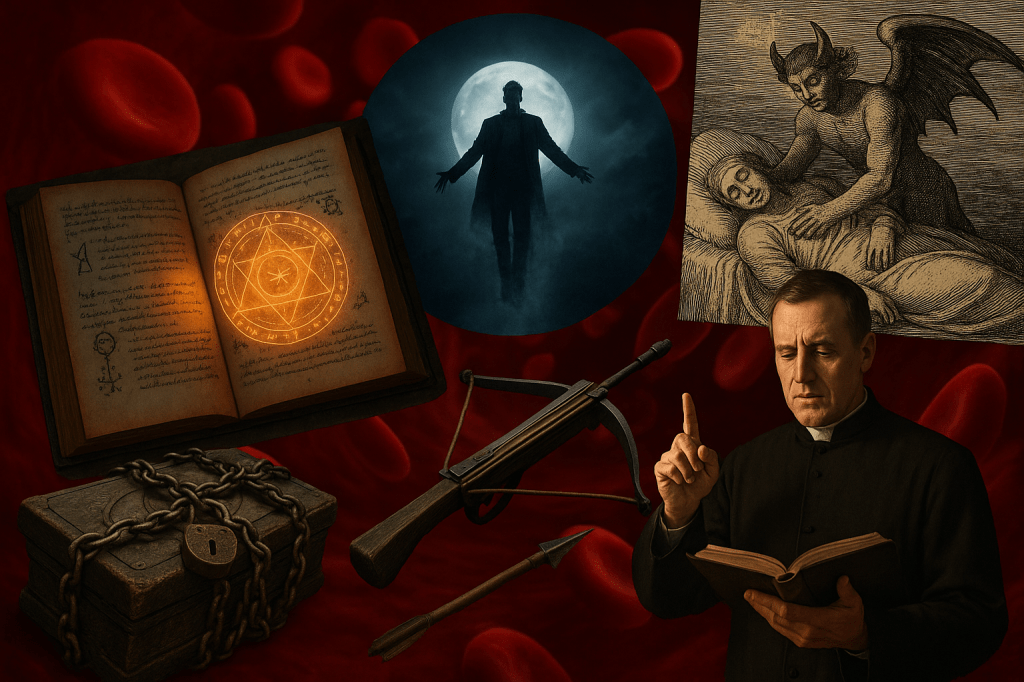
Within The Curse of the Unholy Grail, you’ll find several familiar, well-loved vampire- and magic-system-tropes, a few hit with just a touch of cue-ball English to give some spin. The lore is dribbled throughout, progressive-fantasy-style, as our heroine, the dhampir Nicole Lange, discovers supernatural laws and grows to master her powers.
Five mythical beings appear in this book: Vampires, Dhampirs, Ghosts, Tieflings, and Manesh. Here’s an overview of how they work in the book.
Vampires
Folklore the world-over make us have a strong base-image for these undead. Most vampiric-properties in the book are givens: Sunlight triggers spontaneous combustion. Daytime requires the vampire to sleep. Stakes and hearts don’t mix. Entering a home is by-invitation-only. Etc. But below you’ll find features specific to the book.
Vampiric Features & Powers
(click to expand)
Nourished By Life-Energy — Blood itself has only minimal ‘energy’ rather drinking it creates a conduit to the body’s vitality, the vampire’s true nourishment.
As a plot-mechanic, this solves numerous problems: First, those killed by a vampire needn’t be fully exsanguinated, masking the cause of the death, avoiding exposing vampire activity. For a city of humans to support a vampire-population of any size, they can’t go causing a plague of anemia.
Second, one’s lifelong vitality is an enormous pool of energy, much larger than the few pints of blood in the body. A single feeding can thus repair enormous damage. Or it can sustain the vampire in a quiescent, un-demanding state for months. Again, important should a community of vampires wish to avoid torches and pitch-forks.
Third, an aggressive drain of vitality does permanent damage, unlike an acute loss of blood. But a person can quickly recover from just a small drain. This raises the stakes for the vampire/dhampir; over-exertion requires a big feeding , either finding multiple victims or doing great damage to one.
Fourth, the rate of life-energy- and blood-drain get decoupled, making incapacitating (or eliminating) a foe by bite in multiple-combat feasible. Also, it allows the vampire to abstain from vitality-draining and just making the victim suffer temporary blood-loss (see the cut-scene The Bishop Leaves Nikki Betrayed ).
Fifth, blood’s minimal dose of ‘life’ decays so quickly that blood-banks are not vampire-grocery-stores. Even live animals have less vitality than humans, so a vampire will be malnourished raiding the zoo. This adds time-pressure on the heroine as more vampire entourages arrive for the crowning of their emperor.
And lastly, flowing blood behaving like a wire or signal-cable unlocks the Pont d’Âme connection (see below), the means by which memories, skills, and abilities can be exchanged in an instant.
Gifted By Their Patron — An entity outside the mortal plane lends a portion of power to the vampire to animate them. It’s less direct-control than the winding-up of a toy that the Patron can aim places if it pleases else leave to its own devices.
The metaphor here is Flatland (inimitably explained by Carl Sagan’s Cosmos video): The Patron rests his finger on the lifeless Flatlander husk and suddenly it can move again. Yet very often the extradimensional spirit/devil/demon patron has no interest in actively directing his finger, its mere ‘pressure’ suffices to make the Flatlander brain direct the husk. This is useful, letting the vampire have all the memories, skills, languages, culture, etc. the person had before death.
Over centuries, the husk and the finger stick together, so that when the finger lifts off Flatland, the husk goes with it, with the visual effect of, say, turning to mist as the barest dimples of husk still skim the surface of Flatland. The husk gains incredible strength, resistance to damage, etc., all thanks to the finger powering it.
But to replenish the papery husk, a papery blood is required. Thus even from the beginning, the finger can distort the husk beneath to make fangs appear, claws to form, venom to drip.
Ancient vampires might even distort by that sculpting finger in a flash to sprout wings, form disguises, polymorph to animal shapes.
When a vampire sires a fledgling, a second finger of the patron comes to bear. This explains why a sire has the obeisance of the childe. The stickiness of husk to finger is yet to happen, the brain yet to enjoy the full contact, hence a fledgling acts like a mindless brute without the influence of the sire, at least for the first few decades of its undeath.
When the patron first makes contact with the husk of the dead, it emits a rain of particles that impregnate the earth of a gravesite. This is the only reason a vampire might desire to sleep in his coffin with the dirt of his grave nearby, the slight boost in patronic energy in the otherwise anti-shadow of daytime.
Perception, Influence, and Magic — With their inherent extra-dimensional nature, the vampire sees within mortal lives, the vampire’s voice resonates from within a mortal’s being. The patron’s finger might even stir the fabric of the mortal plane.
Magical sight and telepathic commands are innate powers of the vampire by virtue of their perspective above the mortal plane. Their hypnotic powers are crucial to their survival in human cities, as seduction or tranquility eliminate the need for physical confrontation, and the discovery and retaliation that would bring. But it is far, far easier to influence a person by nudging their own desires.
Controlling animals (rats, dogs, bees, snakes, …) extends from this telepathic command. The simpler the mind, the less strain involved and the less odds they’ll shake the influence, so animal guardians are the preferred way for a vampire to protect their lair during in helpless daylight hours. The non-sentient undead, zombies and animated-skeletons, obey vampires in their midst.
As their power grows, they may gain the ability to cast spells. First simple ones — fire-starting cantrips, a distracting illusion, hypnotic trances — and later more complex magic — lock-opening spells, summoning fog, etc. imparted through Pont d’Âme. Manifestations of their extra-planar vantage.
The Winds of Lethe — The supernatural craves anonymity, and it has ways to make humans not believe and forget their supernatural encounters.
Heaven (and Hell) need humankind to progress as it naturally would, at the level of individual human decisions. Genuine morals, genuine salvation, depends on an uncoerced will. Thus, the supernatural order wipes away any fingerprints of the divine or infernal. It must, or else order unwinds and the Apocalypse begins.
So, Lethe erases memory (and photos and database entries). Except on occasion. Vampire-hunters remember; Chthonic, universal balance demands they do.
Vampires will never tempt the Winds of Lethe, never take it so irresponsibly for granted that consequences come to call. (Such as the guilty vampire himself getting erased, by his peers or by Lethe’s Underworld). This is why Vampires, as a rule, heal the bites they inflict — despite the energetic cost incurred; Supernatural existence must stay unknown.
As a father, I’d read the Rick Riordan stories to my kids, and this one’s in homage to Rick.
Non-Reflection and Non-Shadow — The patron’s ‘pressure’ dips the husk below where reflected light travels. But with mirrors everywhere in modern life, vampires have never been more vulnerable.
‘Vampire-Detectors’ are trivial to build: Use a beam-splitter lens, then compare a straight-on image to a mirror-reflected one. Even a simple laser-beam (blocked directly, passed via mirror) works.
Vampires realize modernity is closing-in on them, making their fake identities harder to maintain, making their safe, undetected travel harder to achieve. It’s only a matter of time before their tells — casting neither reflection nor shadow — make their existence plain and war with human-kind inevitable.
It is these weaknesses that now embolden the old, cautious Vampire Lords to support the Unholy Grail.
Final Death — Fledglings are easier to kill, masters harder, but final-death is always in a shower of sparks and ashy powder.
This is a total nod to Buffy the Vampire Slayer, where it was originally a plot-mechanic to avoid having to hide the scads of vampire bodies Buffy would otherwise leave in her wake. Bravo, Joss Whedon!
Vampiric Nomenclature
| Pont d’Âme (Soul Bridge) | How vampires/dhampir teach or impart complex skills and magical powers to each other. Performed by blood-to-blood contact, the doner selectively conveys gifts to the recipient (who might try to pull more). |
| Redémarrage (Restarting) | Another word for being sired. Some types of dhampir are born normal/dormant and must undergo an activating event. |
| Vue de Cerf-Volant (Kite’s View) | Opening up perceptions to see supernaturally. All life has a supernatural component, thus glows and crackles when this sight is engaged. The dhampir is vulnerable while using it. |
| Soi-Dévoilé (Self-Revealed) | Transforming out of a normal human-shape, whether as minor as extending fangs or as major as presenting a misshapen Lord-form. Nikki calls this her ‘Game-Face’. |
| Unmooring | A supernatural experience’s after-effect too severe for Lethe to repair can leave the person in a state of broken destiny (becoming a vampire-hunter, say), or, worse, left forever tormented by madness and literal demons. |
Vampire Politics & The Grail
In the book, vampires often reside in vampire ‘principalities’ (city-states) lead by a ‘prince’ (not royalty, per se, just the man or woman heading the principality). The principality has the resources to make feeding easier, make establishing identities easier, etc. and those benefits may outweigh the natural revulsion to engaging in undead-politics.
A prince typically won’t have a direct blood-line tie to all his ‘subjects’, so their obedience can’t be compelled the way a sire can his childe. Should a vampire object to the prince’s direction, they find a more compatible principality.
Aside: I first hear this described in the video-game Vampire: The Masquerade — Bloodlines, a game I totally adore, even years later. How could I not put a nod to it in there somewhere?
The pressures of modernity are squeezing vampire communities, making it harder to keep populations of vampires hidden, let alone living in the manner to which they’ve become accustomed.
Thus, polarizing political factions have emerged on the desirability of the Apocalypse.
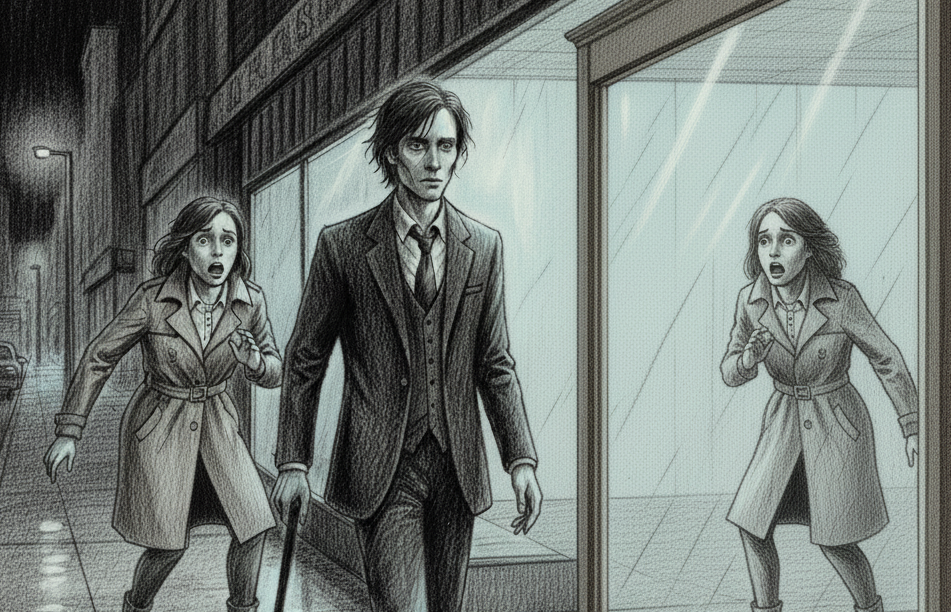
Stoic minds believe any glory vampires gain by subjugating humans would be short-lived, with Heaven soon decisively intervening. Radical minds feel cornered into no other option or just drunk with the thought of carnage.
A vampire-Apocalypse nearly happened in 1918 when the Spanish Flu ‘pandemic’ was engineered by vampire-kind to bring to heel the humans lest they perfect their terrible engines of war. And again in World War II when the Grail chose Hitler as it’s eligible emperor to crown.
All vampires can sense the Unholy Grail’s call when Infernal forces (re-)release it on the Earth. This time, the radical voices among them demand its use — a first-strike weapon against the mortals.
The Dhampir
Legends say dhampirs have as their patron beings of immense power and station. To ‘share’ an ensouled body is a delicate task, demanding constant and subtle flows of power that are simply beyond lesser devils to maintain for long. Dhampirs are not mere demon-possessed bodies, crude and blunt (in our Flatland metaphor, a mortal disc crushed by the finger upon it). Nor are dhampirs mere warlocks lent power by a pact. They are beings that bridge the natural and supernatural realms, and they are free agents.
Mighty patronage brings force, but mortal-spark makes the edge keen. A dhampir no older than the newest fledgling can cut deep against even elder wraiths and master vampires alike. They are an embodiment of balance as old as the universe itself, and hit with devastating finality.
As a bridge, they are uniquely suited to face the threats one side mounts against the other. More to the point, uniquely suited to confront the Unholy Grail. Power yet will, temptation yet empathy, this tension is how the path is kept.
Dhampirs of yore have always made their mark in history. Usually infamously. The French nobleman Gilles de Rais, for instance, valiantly fought along-side Joan of Arc … before becoming utterly depraved, murdering hundreds of children in his occult quest for riches. No net limits the fall from the moral tightrope the dhampir must walk.
After her Redémarrage, Nikki’s only ‘feedings’ came via the Bishop’s Pont d’Âme rituals. For once a dhampir has tasted blood, or worse yet the sweet surrender of death, they can remember only the taste, not the innocence before it. History warns us this.
During the day, their humanity reigns. Though still quite strong, they are otherwise their normal selves (annoyingly light-sensitive at worst). The dhampir can wear a cross, enter a house, be anointed by holy-water, … nothing’s amiss. They can change to vampire-form as well, but even just extending their fangs incurs vampiric-vulnerabilites. To wear your Game-Face in the sun is to blister and writhe in pain so fierce you cannot change back.
At night, personality darkens, yet the human-side retains control. Still, little is amiss. But vampiric-form enjoys all the afforded pleasures … once dusk has closed the eyes of the sun.
Mortal nature does weaken vampiric form, though. To see auras, the dhampir must step out-of-body, while a true vampire would just focus their attention. A vampire glides up walls, but a dhampir must measure every step, concentration fraying should any other power be needed (sensing auras, pushing hypnotic commands, shrouding her presence). And so forces the dhampir to shrewdness.
For every power a dhampir exercises, every strand of darkness they pull into the fore, something human gets tossed behind lost to nostalgia. Which of these thread-bear things will the dhampir care to retrieve? Any?
Tieflings
Scripture describes the children issued from the union of ‘angels’ and mortals. They were giants in gifted abilities and innate ambition, these Nephilim. In the Curse of the Unholy Grail, some of the fallen who defied Heaven came to repentance on hearing Christ’s preaching to the prisons of Hell. Barred from Heaven still and now exiled from Hell, they had to wander the Earth until the end of time, enrobed in human flesh.
Some fell in love, making mortal children. But Hell’s vindictiveness was not finished, and these innocents were cursed to bear the marks of their infernal lineage, to look like the devils their parents once were. Thus were born the Tieflings.
Targeted by men, they were slaughtered wherever they were seen. With relief by the fearful, with glee by the pious. Ashamed, and despising even of their own skin, Tieflings even persecuted each other, a race Hell had ordained should crush itself.
Uliana, herself one of the redeemed fallen, gathered the outcasts and built them a hidden city. She imparted the skill to cast illusory disguise, allowing them finally to walk among the humans.

To the strongest and bravest, Uliana gave harsh but sacred duties, honing their prowess in magical, and martial technique, thus forging the warrior society Cambionai-Statioteis, a vanguard against the abyss.
Through lightning, justice. Through flame, purity. Through Saint Peter’s Sword, the will of God.
Their role has never been so important as now, with the abyss pressing through the mortal fabric at the End Times.
But when the disguise-magic fails, so too does trust. As the Cambionai fight alongside the human vampire-hunters, one slip can bring murderous end to their alliance.
More Mythical Beastiary
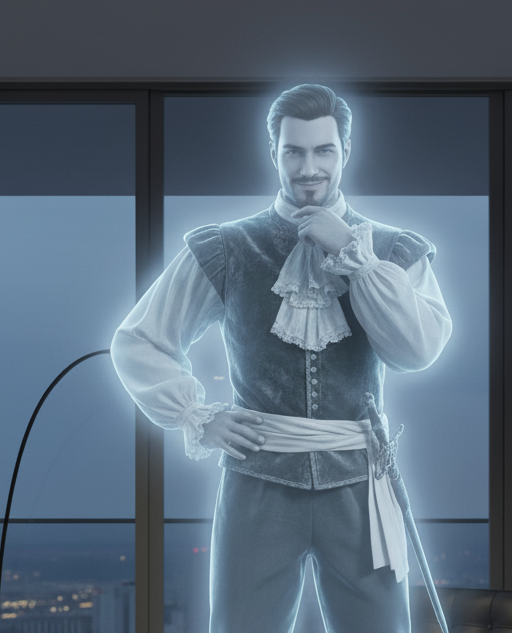
One ghost haunts The Curse of the Unholy Grail, his name is Luys. As a man, he served the Bishop before and after his Redémarrage but Luys was tormented to death by the Unmooring.
A ghost bonds to those who can, and dare to, see them. The bond means the ghost can find the person. To find them in wandering the globe, or to find them lost in doubt and despair. A ghost finds what a person has lost sight-of, what a life will miss once its time comes to a close.
A nastier spirit plagues you in your dreams: the Manesh. Legend depicts them as imps, perched on the chest of those asleep. A creature feeding on fright and suffocation. It comes as bits of leaves or strands of hair blown onto your clothes by the wind, it whispers drowsiness until you cannot rise, then, with fingers in your throat, it plants nightmare seeds to grow in the soil of your choked corpse. Even the magical races fear the Manesh.
What Next?
If the book-series continues, there will be plenty more mythical creatures appearing. For the debut book, the ones above are a pretty good intro to the world-building and magic-system you’ll immerse yourself in.
Leave a comment on which myths and monsters ought to appear next. Who’s going to bring the Apocalypse in book two? Or what more would you like to know about the supernatural in book one?
And, of course, thank you for reading this post.
TopPosts
Leave a comment