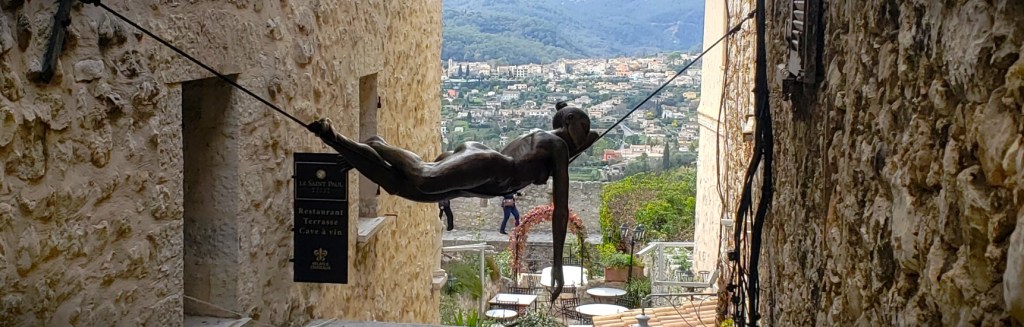
My vacation photos are probably 20% sculptures. Of all the fine arts, sculpture grips me the most. Not just because it’s three-dimensional, experienced and appreciated from 360 about. No, it’s something about their undeniable presence, their true embodiment of the space. Stillness and tension. You feel a permanence just one step removed from becoming alive.
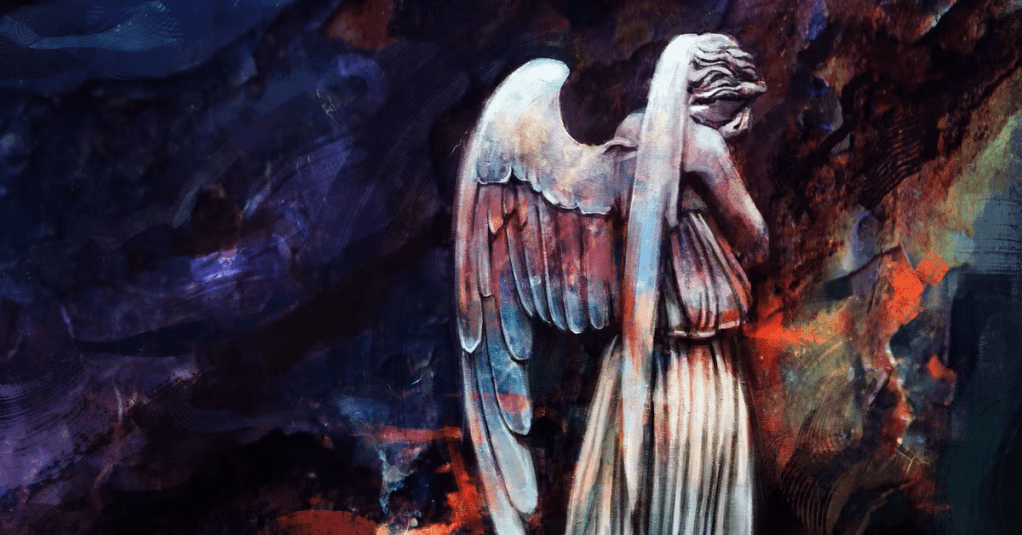
Hopefully, made alive happily, like Galatea by Pygmalion’s kiss. But, as I’m in the headspace of an Urban Fantasy author, more likely animated for malevolent aims. Think ‘Weeping Angels’ from Doctor Who.
A statue’s ‘materiality’, whether rough or cold or abstracted-to-blocks, suggests their character and strength, but always reminds us that something essentially human is absent. Those smooth eyes may see with the umwelt of their kind, but they’re blind to how you and I see the world. And the stone or metal is pitted, eroded, and rough, essentially wearied. Your imagination goes wild, far beyond just interpreting the pose.
In The Curse of the Unholy Grail, I have a scene where the protagonist, Nicole Lange, the Dhampir, battles a golem. That’s terrifying (or so I hope I make the reader feel); its blow will crush you, but yours at best chips it, … and breaks whatever it was you swung. There, the golem is controlled, an agent of another’s agenda, so … nothing personal. Is there a better metaphor for the onslaught of so many soulless adversaries faced in modern life?
Beyond direct usage within a work of fiction, though, visual art gives the creative (literary) brain crucial exercise.
Statues of Magic and Fantasy
Here are some of the artists I greatly admire. When I view their work, “haunting” is the first word that comes to my lips. Were that I so able to stir emotions with words as they do in their mediums.
Philip Jackson
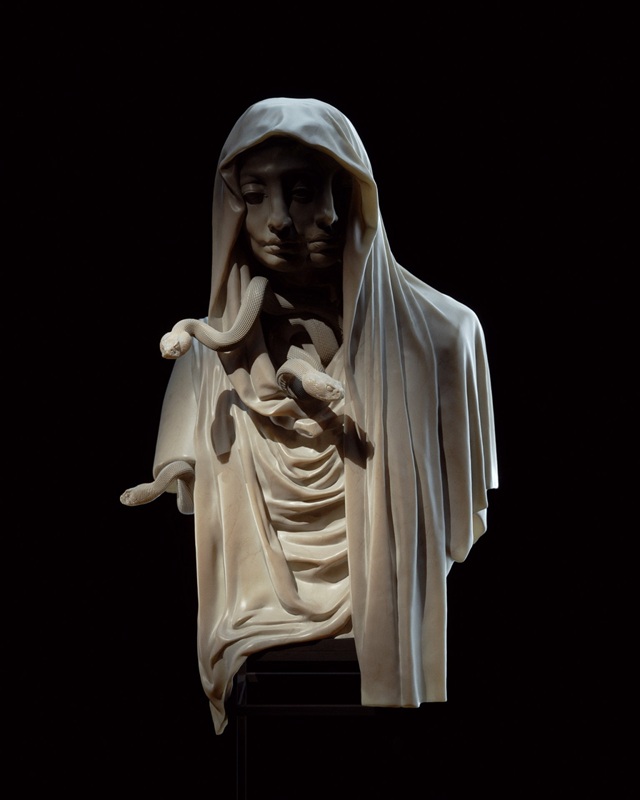
Jackson’s work snaps me to a period in history where we can imagine technology first begins to rival magic. A Steelrising sort of feeling, with humanity caught amidst forces we’ve conjured — doubtless before we were ready to. Maybe we’re not lost to their ‘mercy’, but we’ll have to step carefully to avoid being so.
They’re figures of spectral mystery, sometimes solemn and ritual, sometimes indifferent and menacing, shrouds that hint at an anatomy that you know you won’t actually find within the folds or under the mask. They are distorted echoes of human, over opulent, over bent, with an agenda you will not survive getting caught up in.
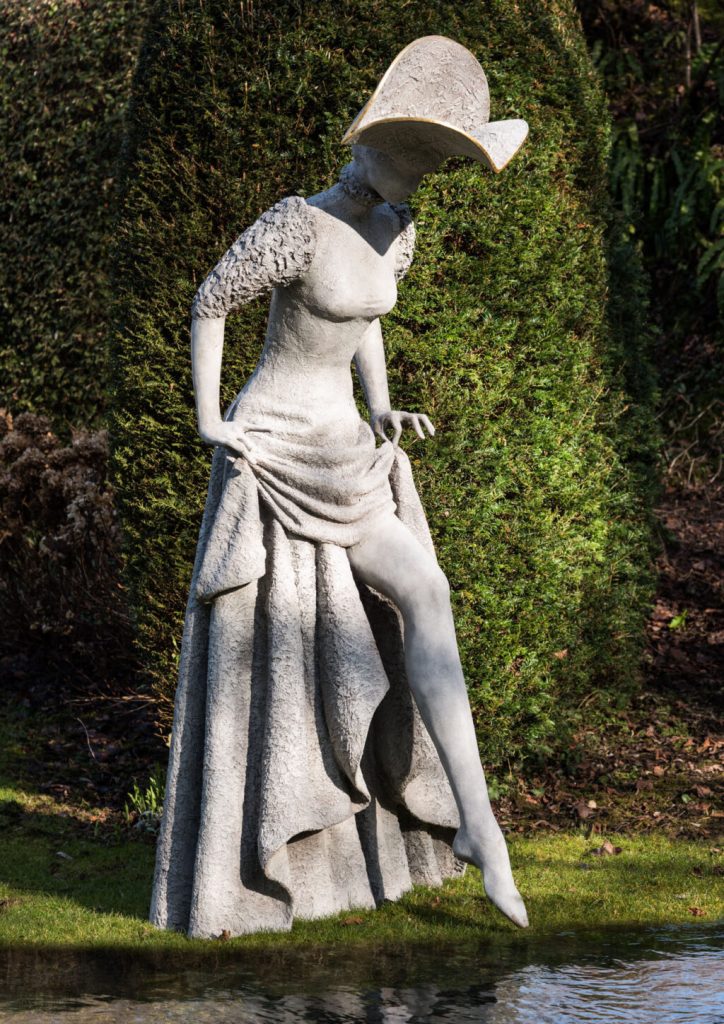
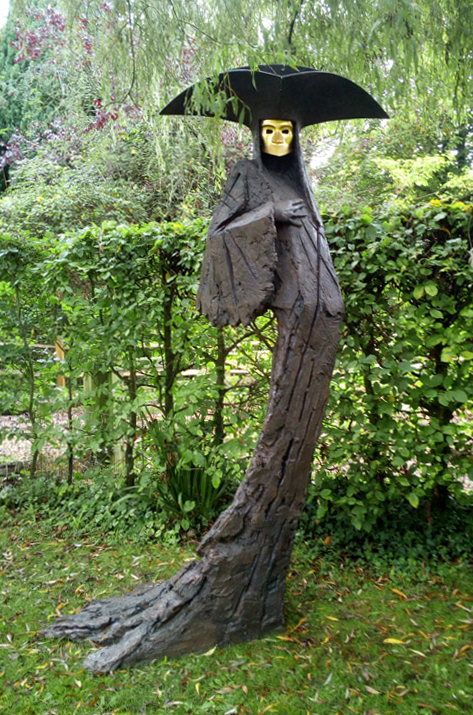
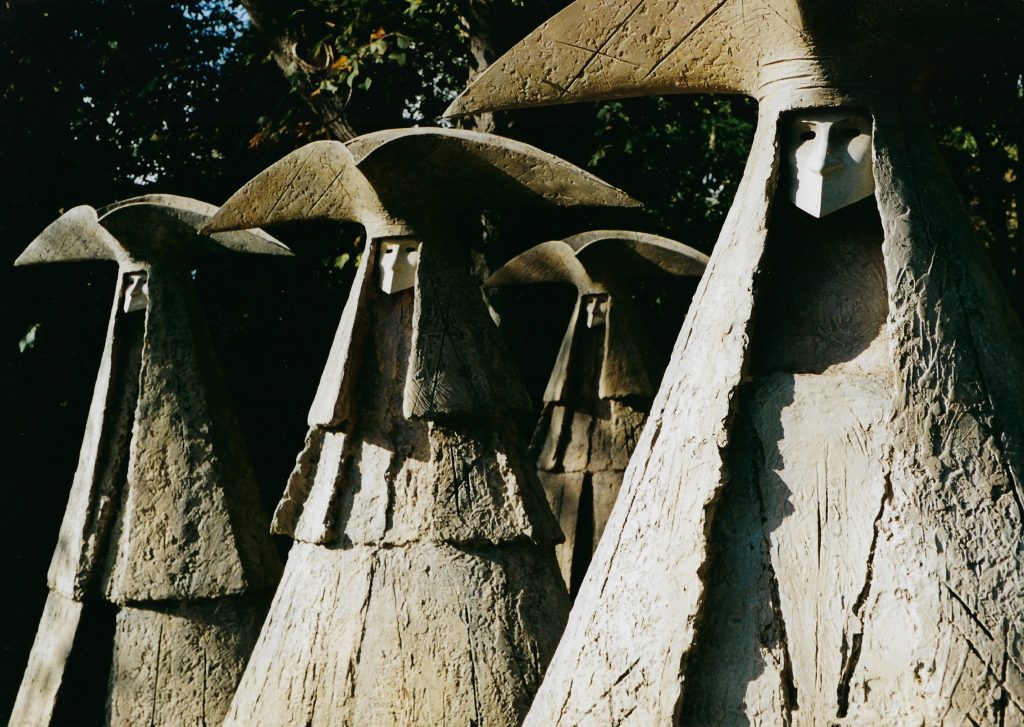

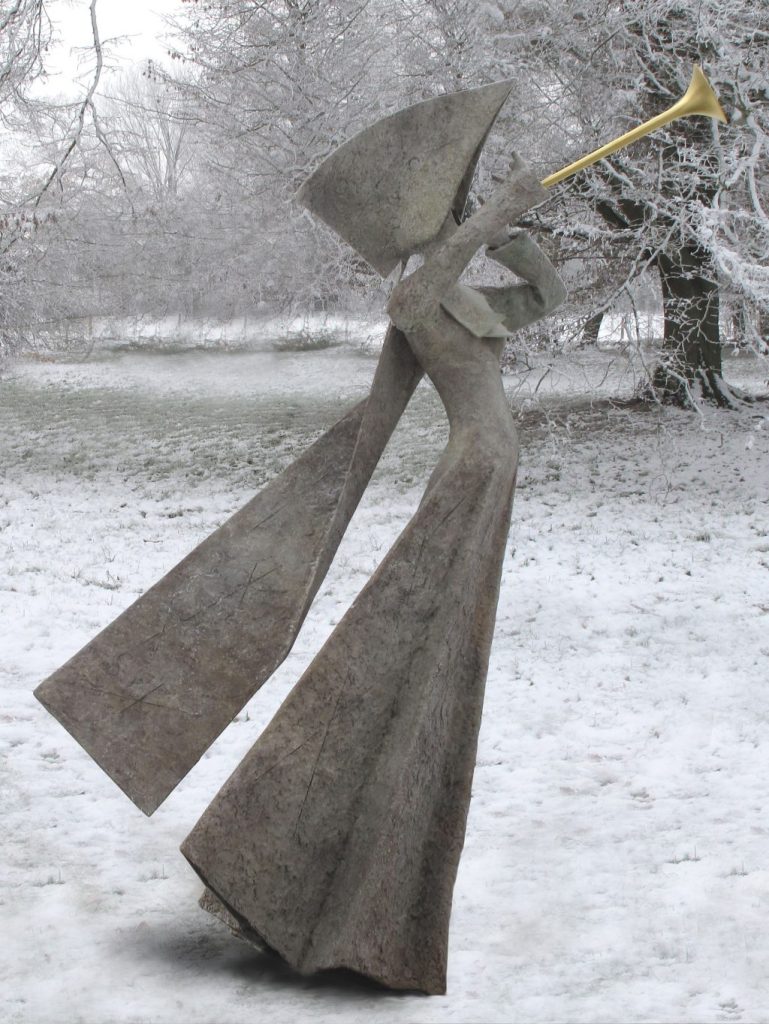

Jackson’s work really incited me to finally make this post. I regret that I haven’t been able to see them in person, yet (I believe “glass slipper” might be at Chichester Cathedral, West Sussex, England).
Check out @philipjacksonsculptures on Instagram or //philipjacksonsculptures.co.uk
Blake Ward
Ward’s “Spirit Collection” often focuses on hollow incompleteness, on the imbalance of body and void, presence and absence. The outer self seems to be flaking off under life’s ardors, exposing a core found to be inorganic. Structural beams, overprovisioned to bear the weight of … something — memory, longing, crushing pressures against the hull … still aren’t strong enough to keep the outer being intact.
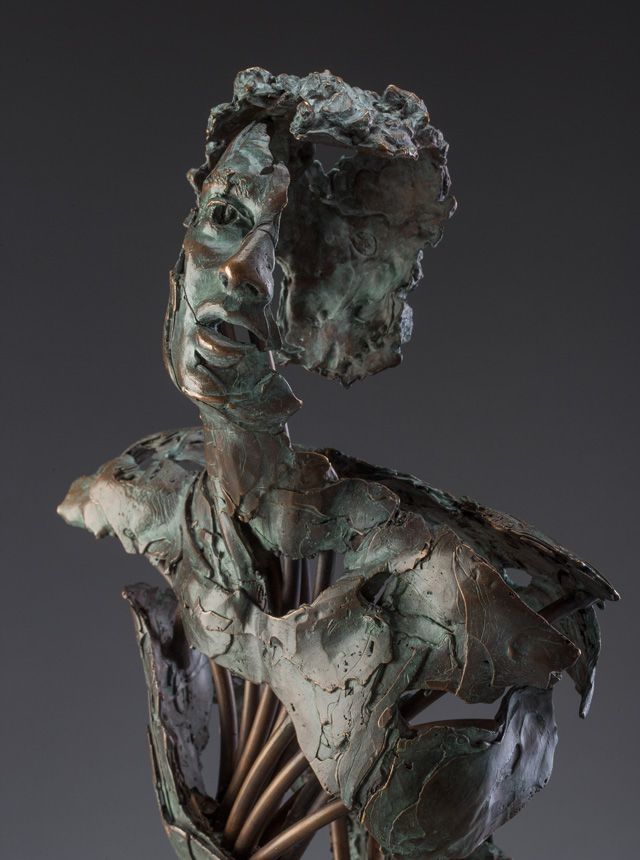
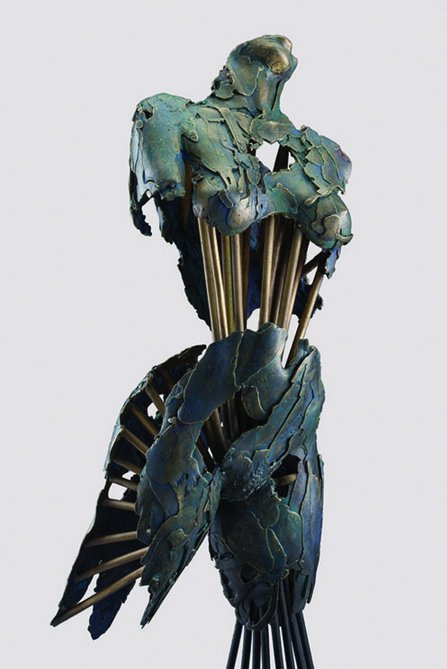
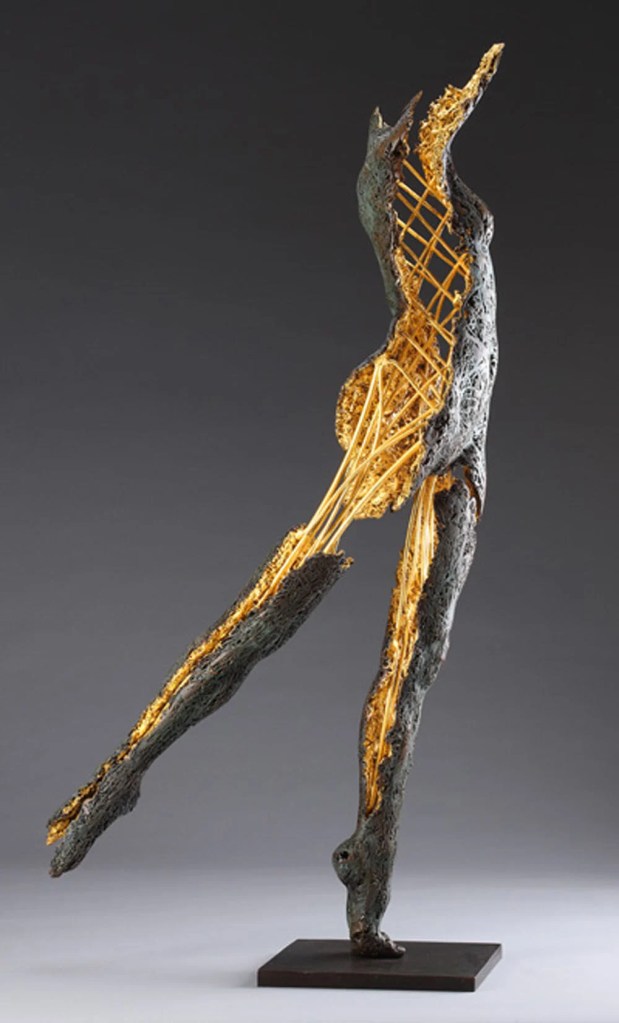
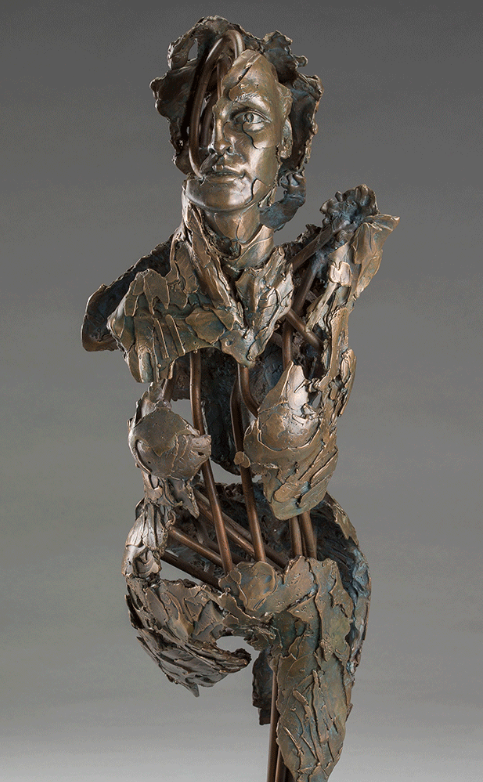
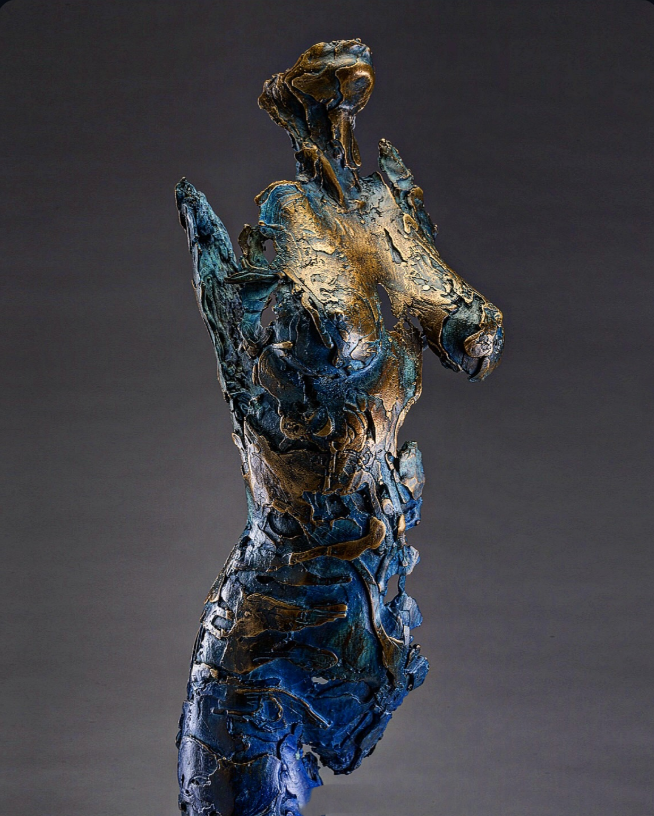

Different avenues of meaning will surely arise contemplating Ward’s work. And mine — Is our surface self the last to surrender once the inside has ceased being authentic? — might be among the least sophisticated interpretations. Well, an Urban Fantasy construct’s crumbling human facade due to a core with no heart, that’s the least sophisticated.
Check out @blakesculpture on Instagram or //blakeward.com.
Hedi Xandt
Xandt’s work brings takes us beyond our mortality, much more so than the other artists featured above. He often exposes vanity in the reminder of our impermanence; the eternal part is gilded, the fleeting part torn or fading. Beauty is not safe against time.
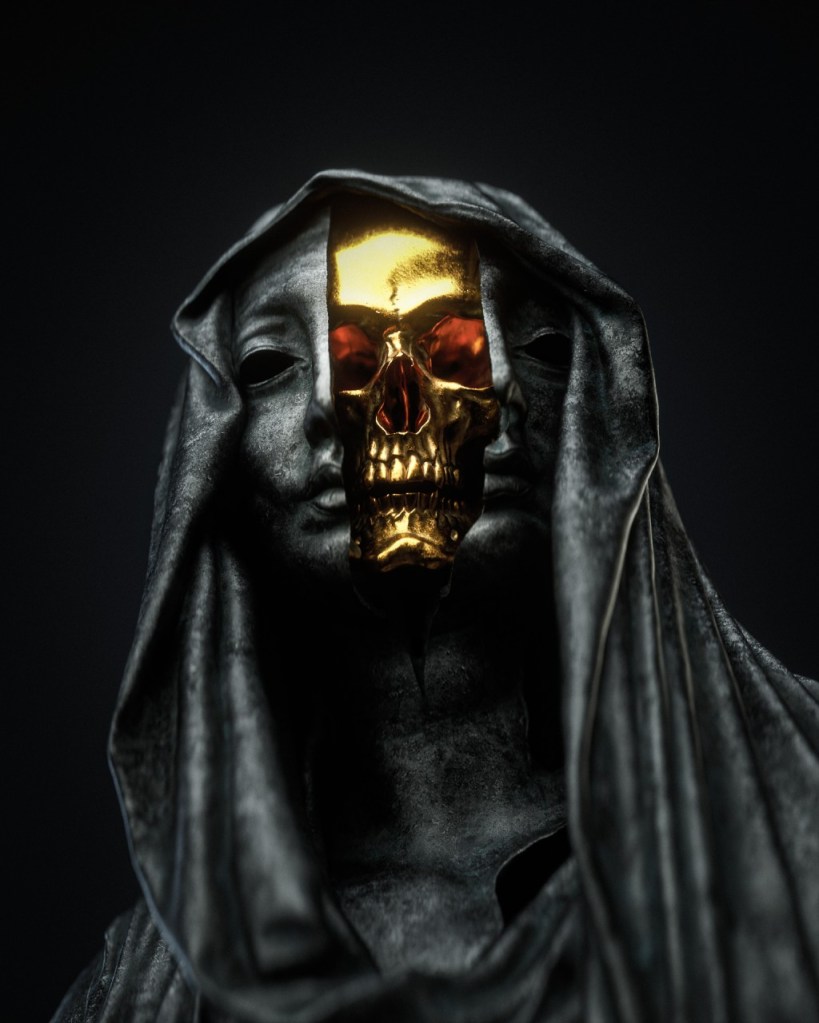
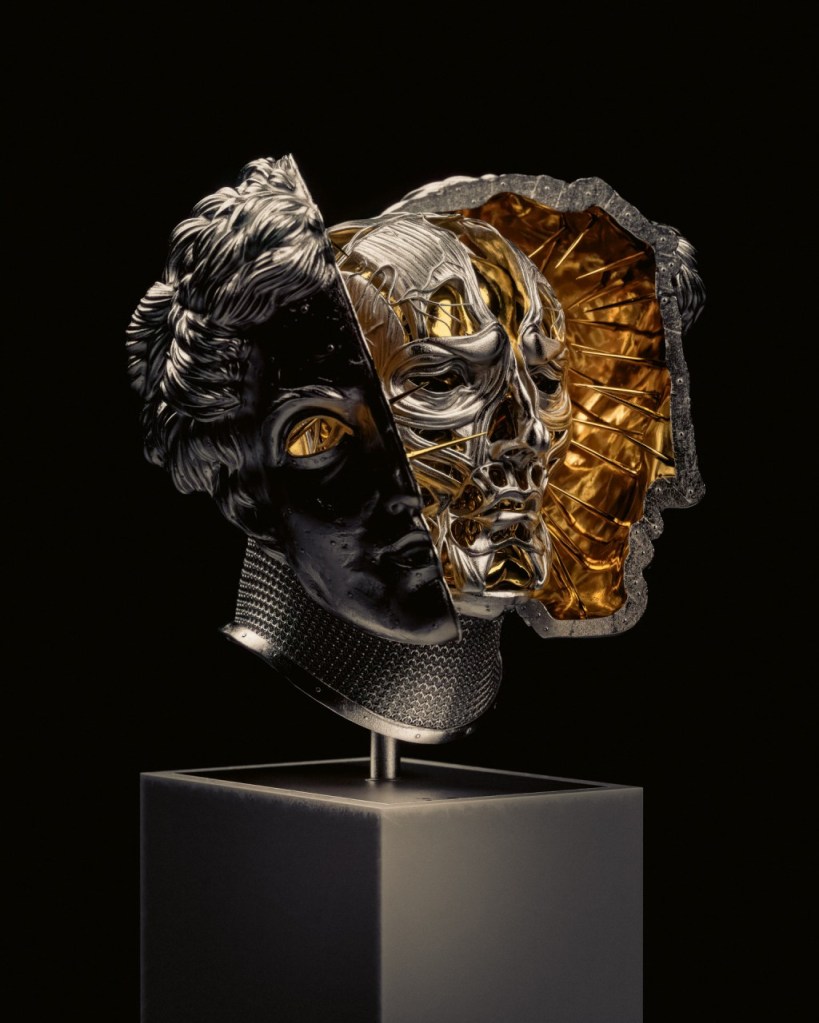
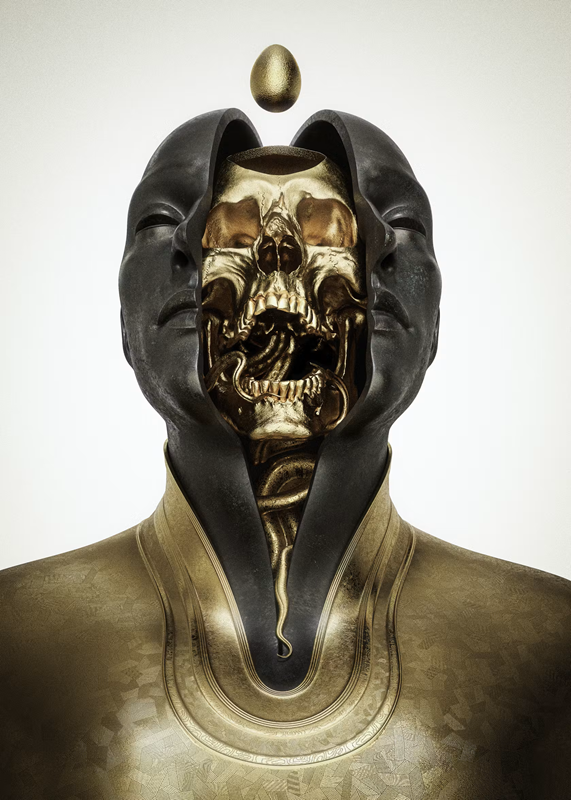
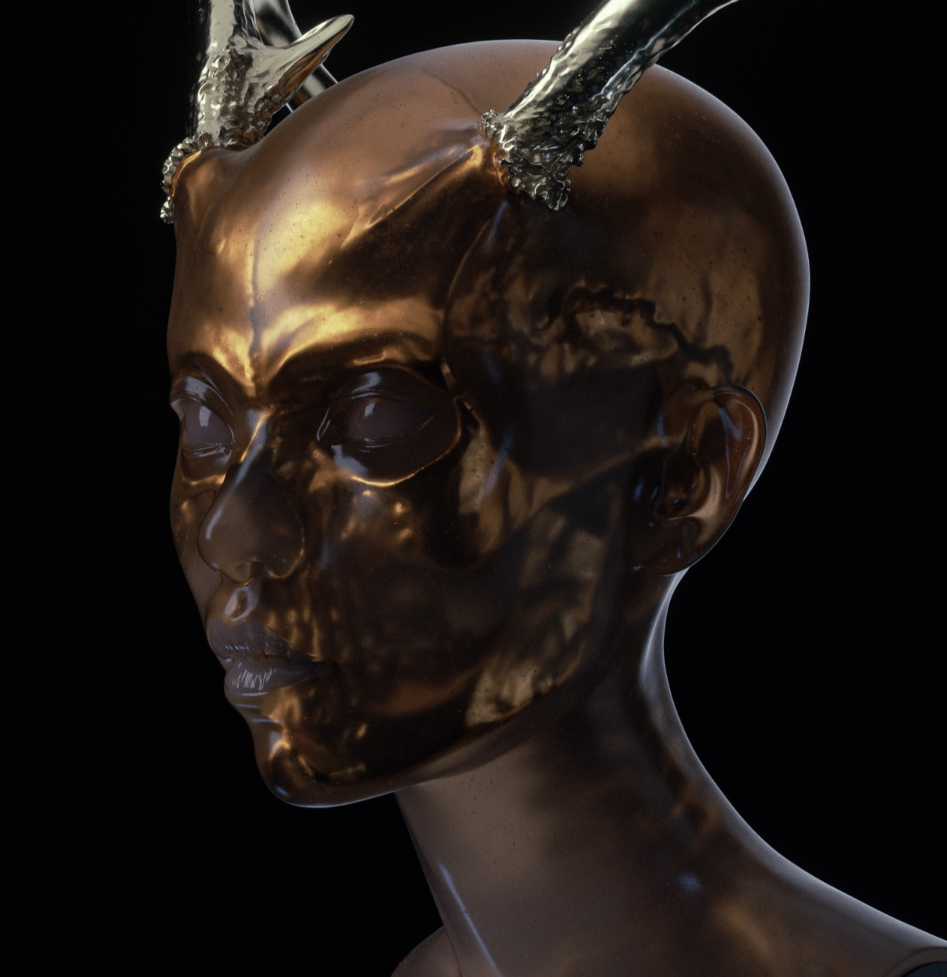
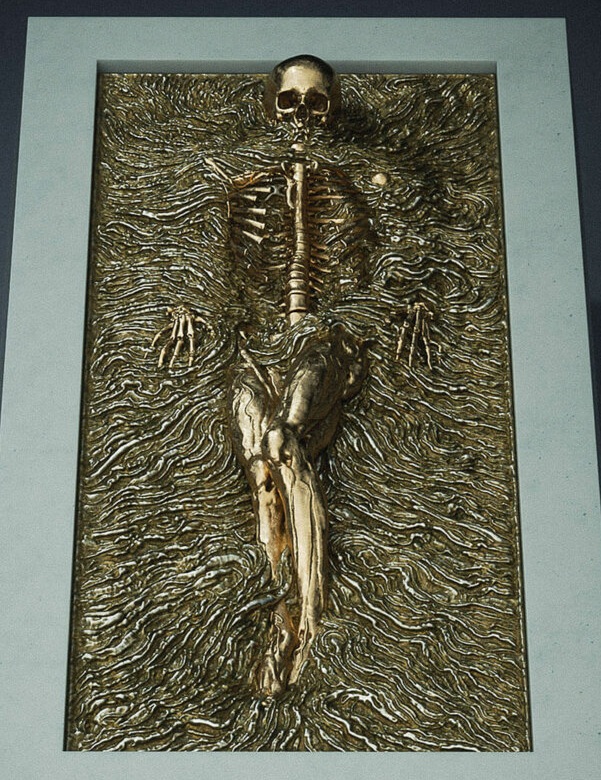
These works aren’t overtly, heavy-handedly macabre to me — well, I mean, yeah, they are macabre — but they’re also saying it’s the inner being that’s the golden one. Our outward projection is the drab mask. It’s a statement about the duality of our natures. And a commentary, perhaps, that life manages to hide our richness until, for some, only death finally lets it out.
Maybe this is how a dhampir will see herself in the mirror.
Check out @HXandt on Instagram or //hedixandt.com.
Wrap
Sculpture inspires me like no other art-form can. There’s a gap between what’s seen and what’s suspected that begs the imagination to fill it. Cues from texture and blockiness may give way to gentleness and smoothness (the way some of Jackson’s statues “grow” out of the soil). Such changes suggest a story over time or context, a 4D or 5D statement. The world from which the sculpture came is another plane of existence and we’re only able to hear the message partly.
What we take in visually allows the full power of our brain’s right-hemisphere to get to work understanding and forming a totality. It’s the highest-bandwidth transmission of interconnected meanings, concepts, and emotions. The connected whole presented needn’t be constrained by the possible, familiar, or logical, granting levels of truth no other kind of communication allows.
If you’re stuck for plot ideas in your novel, goals and obstacles for a scene, etc., then looking at visual art might be your muse. Anyway, I hope the works above inspired you, too.
Do you know of artists whose work combines beauty and mystery like Jackson, Ward, or Xandt?
How do you interpret the artists or works listed above?
What art has gotten your own creative juices flowing?
Thanks for reading.

Leave a comment