
Aspiring writers are like intrepid explorers in the sense that they need courage, time, and an ample set of navigational aids for their journey. Aids such as writing-advice books, for instance. And gin.
And like explorers, it’s possible for writers to get themselves trapped. Writer and characters, frozen in a virtual Shakleton Expedition amid hull-crushing floes of writing-advice books. That’s just as bad as the doldrums of indecision, a broken compass’ misdirection, or a misapprehension that ‘here there be dragons’.
Initially, I provisioned myself with these Effective Writing Guides for Crafting Fiction books, launching the project The Curse of the Unholy Grail. Along the way, I kept reading about craft. And so, voilà, a new list of books that actually helped me chart a truer course on rough seas. (Okay, nautical metaphors stop now.)
Effective Writing Guides, Part Two
After making a Goodreads author profile, I also made a writing-craft bookshelf which will be the ‘living’ set going forward. But blog posts let me better cluster these books by theme, drawing contrasts and showing complementarity among them.
What Writers Learn by Reading Great Writing
Let’s start with that crucial advice: read all the good books you can.
Great, what am I looking for?
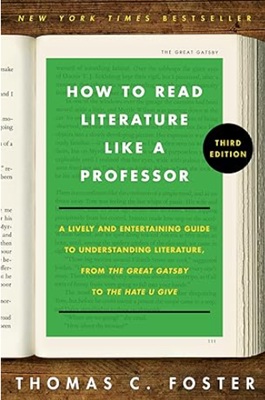
How to Read Literature Like a Professor teaches you how to look for symbol, pattern, convention, and allusion to things from our collective experience and memory. He uncovers these patterns through the eons: the Greeks, the Bible, Shakespeare, the great moderns, …
Foster shows how easily a single, simple thing can stand in for a complex context, a dire eventuality, or a yoke of constraints or expectations.
Recurring ideas appear in our subconscious and ground the reader even if subliminally, and in referencing these, the richness of the readers’ experience increases (while at the same time does the writer’s concision).
Foster shows us weather often isn’t just weather, for instance. It may reflect emotional or thematic states, e.g. the confusion of fog, the cleansing or baptism of change, or the doom of cold isolation. Did the writer have more in mind when he drenched the character? Even if the rain didn’t symbolize something else, if it gave the character the flu, what does illness symbolize?
What changed in my book: My book’s about vampires. Foster reminds us anyone usurping another person’s potential or future options, limiting who they can become or what happiness they might seek, that usurping is a kind of vampirism. So I tweaked how one of my characters, Father Young, interacts with Nikki. I made his expectations about her cut her off from allies she desperately needed. Ironically, Young fearing the vampire half in her gave rise to a literary-type of vampirism in him. Whoa, right?
Reading Like a Writer is the how-to-pay-attention manual for writers to pick up on spice and texture, what attacks the tongue and what lingers to savor.
She examines individual words, punctuation, dialogue, and rhythm, arguing that meaning is built from thousands of local choices. The explorations in this book thus train habits you’ll use every day while crafting and revising your work.
So much of a writer’s sense of style and voice comes from reading examples and seeing the magic there that you’d like to emulate — but good writing can be so magically immersive you miss how the magician did it.
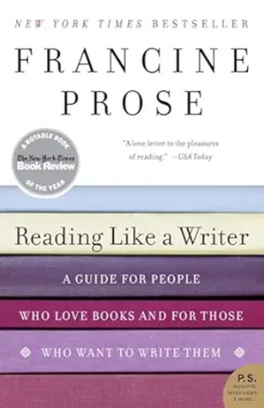
So, Foster shows us macro patterns that look outward from the book, while Prose shows us micro-nutrients that construct a fit body within the book. What’s the story participating in versus what delights the sentence holds. Both books do this by appealing (with lots of citations) to works of the masters.
How Can Writers Affect the Reader?
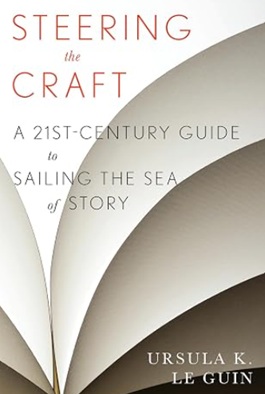
Steering the Craft says that prose is made of language, and language has music. Rhythm is fundamental: a page must be heard in the mind’s ear. Rhythm influences emotion, emphasis, pacing, clarification, thus it must be mastered.
This is a book full of exercises. They don’t focus on meaning so much as attention to sound. The sounds and the silences. When people complain of dull, choppy, droning, or feeble prose, they’re finding fault with the sound of it.
Exercises include writing without adjectives (but see below); writing only short sentences, or only long ones; changing tense or PoV; writing without dialog, or only dialog; and so on.
Repetition of words, of phrases, of images; repetition of things said; near-repetition of events, echoes, reflections, variations … skillful use of them is a great part of the power of prose.
Now, I could easily have contrasted Steering the Craft with Reading Like a Writer; both celebrate the lyrical beauty of language (and both of them detest dogma like ‘never use adverbs’ or ‘always show, never tell’). Both might say to use grammar techniques not for the sake of correctness but for the effect on the reader experience. Both might say weak adverbs weaken prose, precise ones strengthen it.
The Emotional Craft of Fiction reminds us readers remember not the art but the impact. Donald Maass wants us to aim to make the reader feel emotion.
Not simply having the character have emotions but engineering the emotional responses of the reader.
Merely stating what the character feels, paradoxically, makes the reader feel nothing. You must make other details pull this weight. You must show the character is complex. “[I knew] if I ever shut my eyes in the dark and let go, my soul would go out of my body.”
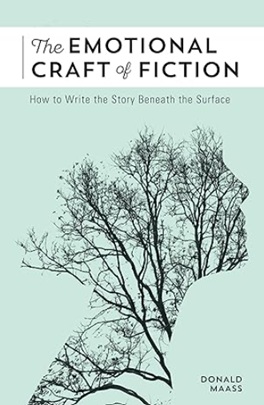
Maass shows ample techniques. Using contradiction, for example, where a character might be both relieved and ashamed makes for a reader feeling empathy more than they would for a one-dimensional character.
I put these two books together because they both tell you how to make the scene land harder, be more memorable. Maass does so by explaining how to invest the reader in the emotion of the scene and characters. Le Guin does so by making the writing itself inspirational and beautiful. Emotion and meta-emotion.
That earlier guide-book list had Lisa Cron’s Story Genius, which we could also contrast with Donald Maass. She’s about how emotion makes the cause-effect links by which one scene forces another, making an emotional thread through the story. Maass is about how do we make the reader feel deeply in the moment. To get better at using emotion, read both, … er, all three.
What changed in my book: Lots. I trimmed a lot of world detail that contributed nothing; facts alone are not significance to the character nor reader, you must choose to reveal only those that are. I made Nikki look at both sides of every plot-point outcome, wrestle with the joy and guilt sides of each coin. I turned a bunch of “she felt” explanations into dialog-choice or bodily action to engage the readers senses, too (and to that end, a shout-out to The Emotion Thesaurus‘ lists of physical reactions). Finally, I think Maass might be to blame for certain late-phase inventory blogged about in Theme is a Four-Letter Word.
What Can Writers Accomplish with Fiction?
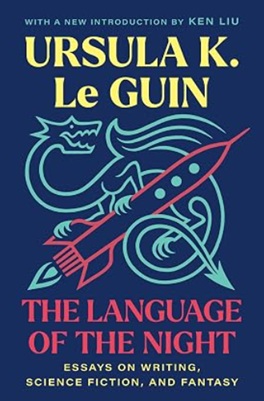
The Language of the Night is a collection of essays written over decades describing, in essence, what sci-fi and fantasy are for and thus how to do it well.
It’s a great lesson on how and why to be genuine and an admonition not to escape into the phony. On the contrary, Sci-Fi/Fantasy is not an escape from reality but another way of understanding it, one where the elements we need to see are amplified.
Fantasy as ‘Escapism’? There is no escape from the phony. There is an escape into the phony. This doesn’t take us in the direction of great myths and legends, which is always toward an intensification of the mystery of the real. This takes us the other way, toward a rejection of reality, toward madness.
And, of course, Le Guin has such delightful wit throughout. I can’t help but share this one: Beware allegorical readings: “the girl mechanic is obviously the Virgin Mary, while the leader of the alien robots is a Christ figure, just like Gollum — or was it Frodo?” This humor is often front-and-center, such as in the essay title “From Elfland to Poughkeepsie.”
What changed in my book: It reaffirmed that some of the fictional elements of greed, prejudice, and deplorable character should bear more parallels to current political or populist-religion realities.
The Art of Fiction is about what’s required to create the ‘fictional dream’, and what one should be dreaming about.
Much of what goes into a real story goes in not because the writer desperately wants it there, but because he needs it: The scene justifies some later action, shows some basis of motivation, or reveals some aspect of character … all because what’s to follow later must seem credible. One may develop a minor character in depth only because someone’s needed to sell the clock for the time-bomb.
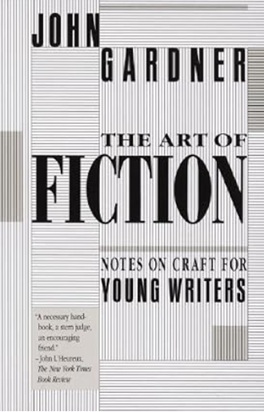
One very interesting concept struck me: Psychic Distance. That’s the proximity the reader feels between himself and the events in the story. “Henry J. Warburton had never much cared for snowstorms” < “Henry hated snowstorms” < “God how he hated these damned snowstorms” < “Snow. Under your collar, down inside your shoes, freezing and plugging-up your miserable soul.” That’s a handy concept, isn’t it?
Gardner believes in good fiction, the reader never has to go back over a sentence just to find out what it says. For pleasure, sure; understanding, no.
What changed in my book: I had some basis now for revisions that made scenes punchier, easier to grasp, more immersive.
One could also cluster Gardner’s book with The Emotional Craft of Fiction; certainly he feels the primary subject of fiction is, now and ever, human emotions, values, and beliefs. And he certainly uses detail-choice as a tool for conveying emotion: one does not simply describe a barn, one describes a barn as seen by someone in some particular mood, because only in that way can the barn … be tricked into mumbling its secrets.
While Gardner is concerned with the novelist creating a convincing fictional experience — the “vivid and continuous dream” — via technique discipline, Le Guin’s the one more willing to ask what dreaming itself is for.
Wrap-up
So, aspiring writer, if you’re wondering what to put on your ‘want to read’ list, I hope this article has given you some ideas, whether your burning question at the moment is ‘What should I notice?’, ‘How can I move the reader?’ or ‘What’s my fiction aiming to do?’
Stay tuned for an upcoming post about John Truby’s Anatomy of Story (that source of late panic I cursed about in Make Conflict Sharpen Your Theme).
Point me/us to craftsmanship reads you’ve found inspiring lately in the comments below. And thanks for reading.

Leave a comment